
¡Oferta!
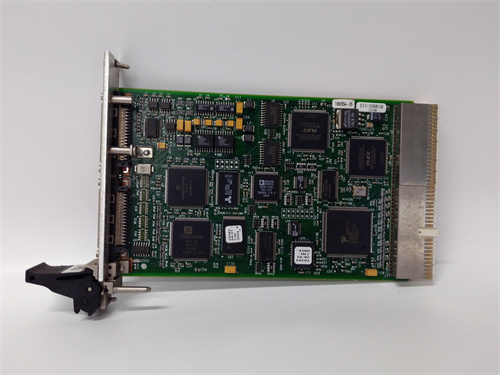
NI PXI-7340 | National Instruments | 7340 Series | Stepper Control
$ 97.01
Description Key Technical Specifications Parameter Specification Part Number NI PXI-7340 Product Type PXI Motion Controller Module Control Axes 4 axes (stepper or servo) Update Rate 62.5 µs per axis (PID loop) Velocity Profile Trapezoidal, S-curve, contouring, electronic gearing/camming Encoder Feedback Quadrature encoder inputs, up to 20 MHz Output Signals Step/Direction, CW/CCW, ±10V analog torque/speed (for servo) Position Range 32-bit (±2 billion counts) Velocity Range 0 to 5,000,000 counts/s (stepper) Digital I/O 32 bidirectional digital lines (5V TTL) Limit Inputs Forward/Reverse limit per axis, home sensor Trigger Input High-speed capture trigger Breakpoint Output Position breakpoints for synchronization PXI Interface PXI/CompactPCI compliant, 33 MHz, 32-bit Power Supply 5V DC (from PXI backplane), 12V for external I/O Operating Temp 0°C to 55°C (32°F to 131°F) Storage Temp -20°C to 70°C (-4°F to 158°F) Humidity 10% to 90% non-condensing Software NI-Motion driver, LabVIEW, C/C , .NET Certifications CE, FCC, UL Product Introduction (Anti-Template) You’ve got a PXI chassis running test sequencing, and now you need to add coordinated motion—maybe a linear stage for positioning a DUT, or a conveyor for material handling. The NI PXI-7340 slides into a PXI slot and gives you four axes of motion control without dragging in a separate PLC or standalone motion controller. It handles both stepper and servo drives, which is useful when your stages mix technologies. The PID loop updates at 62.5 µs per axis—fast enough for most industrial positioning, though not quite “high-speed synchronized” like a dedicated multi-axis controller with 20 kHz shared memory. The 32-bit position range means you won’t roll over on long-travel stages. One gripe: the digital I/O is 5V TTL, so if your machine uses 24V sensors, you’re adding level shifters or external interface boards. And the NI-Motion driver stack? It works, but plan on a learning curve if you’re used to raw pulse-generation programming. Installation & Configuration Guide This is a PXI module. Physical install is trivial; software configuration is where you’ll spend time. Phase 1: Pre-Installation: ⚠️ Power down the PXI chassis completely. PXI supports hot-swap on some modules, but motion controllers with external power should never be inserted live. Tools: #1 Phillips (for chassis cover if needed), ESD strap. Critical: Identify the slot where the NI PXI-7340 will reside. Note the slot number—you’ll need it for resource assignment in MAX (Measurement & Automation Explorer). Also, verify your PXI chassis backplane supports the module; any PXI chassis with standard 3U slots works, but older chassis may have limited power on the 5V rail. Check the total current draw. Phase 2: Installation: ESD strap on. Align the NI PXI-7340 with the card guides in the selected slot. Push firmly until the injector/ejector handle engages, then use the handle to seat the module fully in the backplane. Tighten the two captive screws at the top and bottom of the faceplate—torque to 0.5 N·m (4.4 in-lb). CRITICAL: If you’re using external 12V for the digital I/O (for higher voltage translation), ensure the wiring to the front-panel 68-pin VHDCI connector is correct before applying external power. Pinout is in the user manual; a miswire can damage the module’s I/O buffers. Phase 3: Software Configuration: Power up the chassis. Launch NI MAX. The NI PXI-7340 should appear under “Devices and Interfaces”. If it shows a warning icon, right-click and run “Self-Test”. If it fails, check slot seating. Install NI-Motion drivers if not already present (version 7.x or later). Configure the axes in MAX: set axis type (stepper/servo), encoder resolution, limit switch polarity, and home routine. Save the configuration as a .cfg file—back it up. Phase 4: Application Testing: Open LabVIEW (or C environment). Use the NI-Motion example finder to locate “Single Axis Move.vi” or equivalent. Execute a simple relative move on axis 0 at low speed. Monitor the encoder feedback vs commanded position. If following error occurs, check drive enable signals and wiring. Test limit switches by manually actuating them during a move—motion should halt. For multi-axis coordinated moves, test electronic gearing/camming in software before running at production speeds. Frequently Asked Questions (FAQ) 1. What’s the difference between PXI-7340 and PCI-7340? Form factor and bus interface. The NI PXI-7340 uses the PXI/CompactPCI bus with the 3U Eurocard form factor and front-panel I/O. The PCI-7340 is a full-size PCI card for desktop PCs. Electrically and functionally, they’re identical—same motion engine, same 68-pin I/O connector, same software. If you’re moving an application from a desktop to a PXI chassis, the code and I/O wiring transfer directly. 2. Can I control both stepper and servo drives on the same PXI-7340? Yes, per-axis configuration. Each of the four axes can be independently set as stepper (step/direction outputs) or servo (±10V analog output). You’ll need external drives compatible with the command type. For steppers, the PXI-7340 generates the step pulses; for servos, you’ll also need encoder feedback wired back to the module for closed-loop control. Mixing types on adjacent axes is fine. 3. The encoder counts are jumping erratically. What’s the fix? Noise on encoder lines. The NI PXI-7340 accepts differential or single-ended encoder inputs. Differential (RS-422) is strongly recommended for any cable run over 1 meter. If you’re using single-ended, switch to differential. Also check: Cable shielding: ground at one end only. Termination: add 120Ω resistor across differential pairs at the module input if drives don’t provide it. Update rate: in software, set the encoder filter to reject noise above 100 kHz if your max speed allows. 4. Is the PXI-7340 compatible with 24V limit switches? Not directly. The digital inputs on the PXI-7340 are 5V TTL. Applying 24V will damage the inputs. Use an intermediate interface: either a 24V-to-5V optocoupler board (NI offers the UMI-7774 or UMI-7764) or build your own with resistors and zener diodes. The UMI series also provides convenient screw terminals for field wiring. 5. What’s the maximum cable length to the drives? For step/direction signals (stepper), keep unterminated cables under 3 meters. Beyond that, use differential line drivers (RS-422) on the PXI-7340 outputs—the module supports differential mode via the 68-pin connector (pins differ from single-ended). For encoder feedback, differential signals can go 30 meters with proper cable. For ±10V analog servo command, 10 meters is typical before noise becomes an issue; use twisted shielded pair. 6. The module passes self-test but won’t move an axis. Software says “following error.” Following error means the commanded position and actual (encoder) position differ beyond the tolerance set in software. Causes: Drive not enabled: check the enable signal wiring and software enable bit. Wrong encoder polarity: axis moves one way, encoder counts the other. Swap A /A- or B /B- in wiring, or invert in software. Torque/speed limits: the servo drive may be limiting current; check drive parameters. Mechanical binding: axis physically stuck. Start by commanding a tiny move (100 counts) at low speed and watch encoder feedback. 7. Is the PXI-7340 still supported by National Instruments? It’s in “mature” status. NI still provides drivers (NI-Motion) for modern OSes (Windows 10/11), but new development is focused on the PXIe platform with different motion controllers. The PXI-7340 is not being manufactured new—what’s available is new surplus or used. Driver support will continue, but don’t expect new features. If you’re designing a new system, look at NI’s 7350 or 7360 series, but verify PXI hybrid slot compatibility. EMERSON 1X00415H01 EMERSON 3A99141G01 PLC EMERSON 3A99158G02 PLC 3A99190G01 EMERSON 3A99199G01 PLC EMERSON EMERSON 3A99200G01 PLC Email: [email protected] Phone: 86 15340683922 Sales:Wu Jiedong Our products are guaranteed for 1 year, with new and original production stopped and imported spare parts. All prices listed on the official website are subject to confirmation by contact: Wu Jiedong (manager). Our product: brand new original packaging Our warranty: All new or repaired parts have a 12 month warranty period beginning Our payment: 100% telegraphic transfer of inventory items before shipment, conditions can be proposed! If you have any downtime spare parts that you cannot find, please feel free to call or use email to contact me. If there are issues that the product cannot solve, please contact me. Product prices can be negotiated. Please do not consider contacting me!
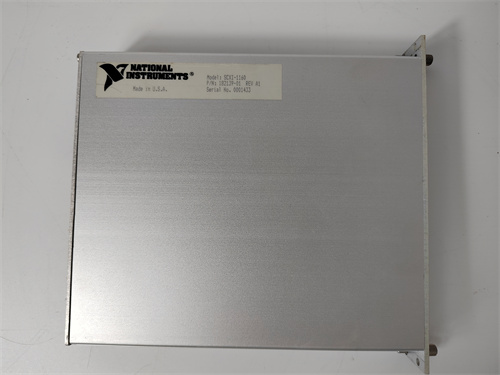 NI SCXI-1160 | National Instruments 16-Channel Relay Module
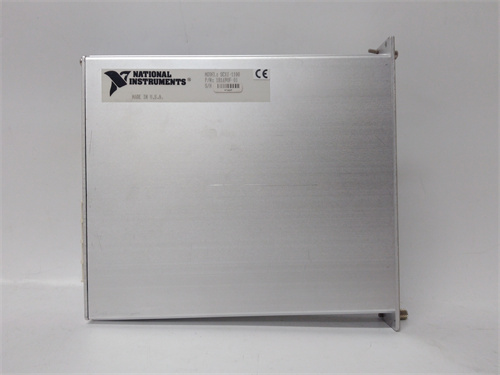 NI SCXI-1100 SCXI-1121 SCXI-1140 SCXI-1160 SCXI-1124
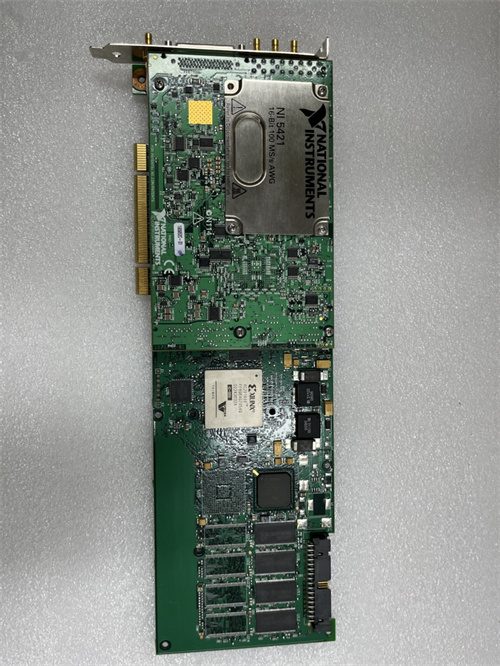 NI PCI-5421 PCI-6224 CPCI-3840